





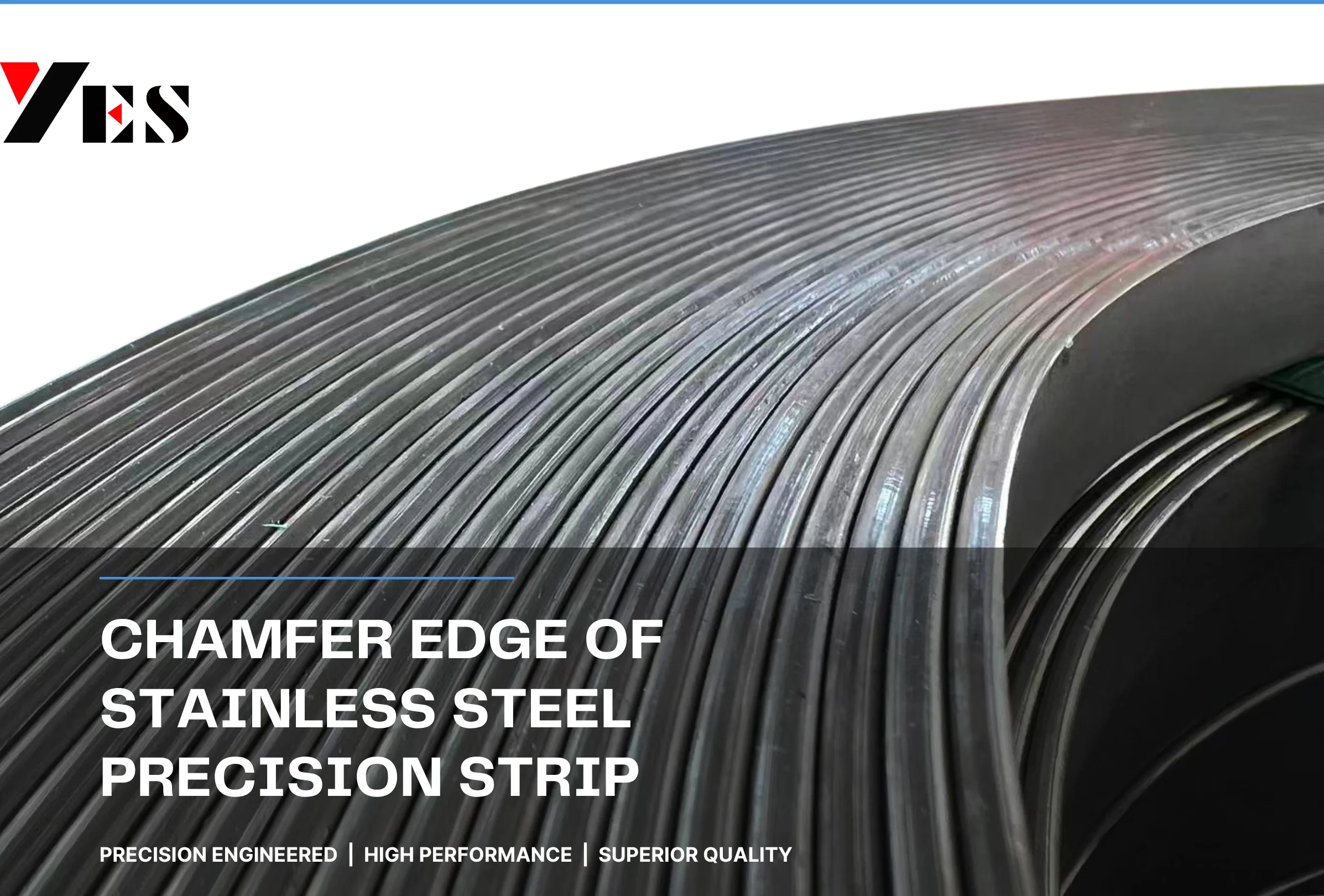
In high-precision manufacturing, a fraction of a millimeter can represent the entire margin between a flawless production run and catastrophic tooling failure. When engineers design ultra-thin components—such as micro-switches, medical diaphragms, or automotive springs—they carefully calculate tensile strength, dimensional tolerances, and chemical composition. However, one critical variable is frequently overlooked until production begins: the profile of the slit edge.
Standard slitting processes inherently leave microscopic burrs and sharp 90-degree fractured zones along the sides of the metal strip. For advanced applications, these raw edges introduce significant mechanical risks.
At YES Stainless International, we provide a reliable solution to this manufacturing challenge by offering fully customized chamfer edges on our high-performance precision stainless steel strips.
Understanding Precision Strip Processing Capabilities
Before diving into edge engineering, a supplier must possess the core metallurgical capabilities required to handle ultra-thin and ultra-hard materials. Processing high-precision strips demands specialized tension control and heavy-duty slitting machinery to ensure total dimensional consistency.
The technical processing window at YES Stainless International includes the following engineering specifications:
| Technical Property | Manufacturing Capability Range |
| Thickness Range | 0.02 mm to 1.5 mm (Ultra-thin foil capabilities) |
| Width Range | 1.5 mm to 1219 mm |
| Hardness Spectrum | 220 HV to 650 HV (Annealed to full-hard spring temper) |
| Edge Profiles Available | Slit Edge, Deburred Edge, and Custom Chamfer Edge |
What is a Chamfer Edge and Why is It Necessary?
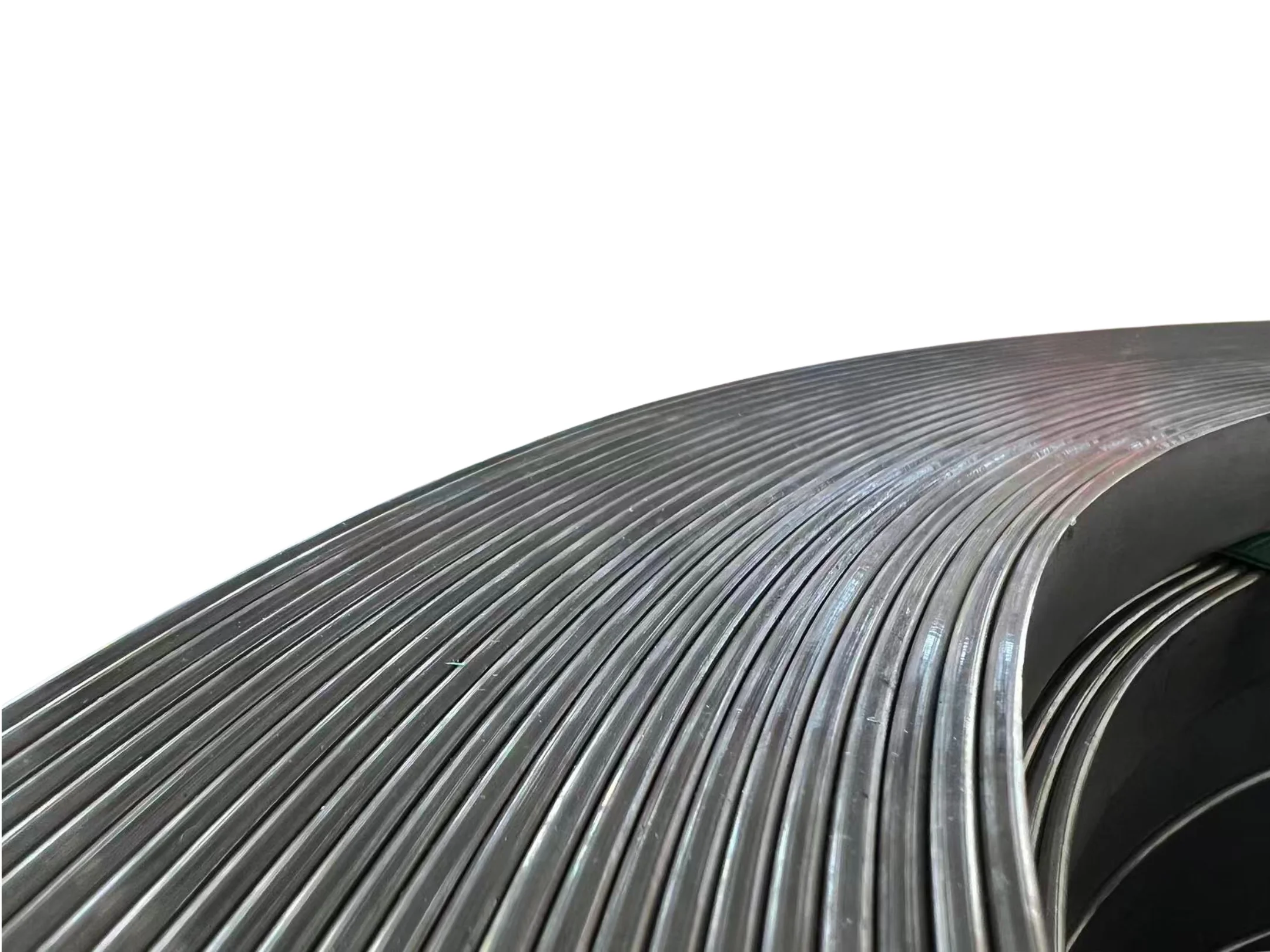
When stainless steel coiled master sheets are slit into narrow widths, the slitting knives shear and break the material under immense pressure. This standard mechanical process inherently leaves a “slit edge” characterized by a slight rollover, a burnish zone, a fracture zone, and a residual burr.
A chamfer edge is a secondary, precision-machined profile where these sharp, fractional corners are completely removed and transformed into a smooth, beveled, or rounded transition.
To help understand the physical differences, here is how a standard slit edge compares to a professionally conditioned edge:
| Edge Feature | Standard Slit Edge | YES Stainless Chamfer Edge |
| Microscopic Burr | Present; can flake off and damage tooling. | 100% Removed; perfectly clean. |
| Corner Geometry | Sharp, uneven 90-degree fracture zone. | Smooth bevel or uniform rounded radius. |
| Stress Distribution | High concentration at sharp corner zones. | Uniformly distributed across the beveled slope. |
| Handling Safety | High risk of cutting operators or catching on guide rails. | Safe to handle; glides smoothly through machinery. |
Processing this edge profile uniformly requires absolute mechanical stability—especially when handling ultra-thin gauges down to 0.02 mm or high-tensile tempers up to 650 HV. At YES Stainless International, our automated edge-conditioning lines treat both sides of the strip simultaneously, ensuring perfectly symmetrical geometry across kilometers of continuous steel coils.
3 Critical Engineering Benefits of Customized Chamfer Edges
For procurement managers and R&D engineers, specifying a customized chamfer edge on a precision strip is not an unnecessary aesthetic addition; it is a critical safeguard for the production cycle.
1. Eliminating Micro-Cracks and Enhancing Fatigue Life
When an industrial metal strip undergoes millions of repetitive flexing cycles—such as in a chronic flapper valve or a constant-force spring—residual stress concentrates heavily at the outermost corners. Microscopic burrs from standard slitting act as stress concentration focal points, generating microscopic fractures that eventually propagate across the entire strip. A chamfered edge distributes mechanical stress uniformly, drastically extending the service life of the component.
2. Protecting Precision Stamping Dies from Premature Wear
High-speed automated progressive stamping lines use expensive, highly calibrated tool-and-die sets. If a raw strip with hard, abrasive burrs runs through these systems at high speeds, it acts as a micro-cutter. This abrasive action scratches the die surfaces, causing premature chipping, misalignment, and frequent tool changes. Pre-chamfering the strip ensures a smooth entry into the tooling cavity, reducing downtime and protecting your capital investments.
3. Ensuring Smooth Automated Assembly and Feed Cycles
In electronic and medical component assembly lines, automated grippers and mechanical feeders handle miniature parts at rapid intervals. Strips with ragged or square slit edges are prone to catching, nesting, or jamming inside automated guide rails. Smooth chamfered edges allow materials to glide through assembly tracks smoothly, reducing material waste and improving overall equipment effectiveness.
The YES Stainless Advantage: Overcoming the Thickness-Hardness Challenge
Machining a uniform chamfer on raw material becomes exceptionally difficult when the material is extremely thin (under 0.10 mm) or extremely hard (above 500 HV). Soft alloys can deform under the pressure of secondary tooling, while ultra-hard spring steels accelerate the wear of edge-conditioning machinery.
Through proprietary rolling control and specialized diamond-tipped edge conditioning lines, YES Stainless International achieves perfectly symmetrical, custom beveled edges even on thin-gauge foils or full-hard 650 HV spring temper coils. We carefully synchronize raw materials from premier mills with our in-house finishing technologies to guarantee that the microstructure remains uncompromised by thermal stress during the chamfering stage.
Conclusion: Optimize Your Precision Components Today
The reliability of a high-performance precision component depends on the integrity of its edges. By integrating specialized chamfering directly into your material specifications, you protect your dies, prolong your product lifespans, and ensure steady automated production.
Request a Technical Consultation
Whether your next project requires a custom width down to 1.5 mm or an ultra-thin 0.02 mm foil with tailored hardness, the technical sales group at YES Stainless International is ready to assist you.
Ready to schedule a shipment?
Share your spec, test plan, and destination – we’ll confirm feasibility and delivery windows.
