




For global procurement managers and engineering teams, specifying raw materials is rarely a choice between “good” and “bad”—it is about balancing performance requirements, budget constraints, and delivery schedules.
When sourcing stainless steel piping for petrochemical plants, high-pressure hydraulic lines, architectural structures, or food-grade processing systems, the manufacturing process dictates the pipe’s pressure ratings, surface finish, dimensional tolerances, and unit cost.
Understanding the core technical differences between Seamless vs. Welded (ERW) and Cold Drawn vs. Hot Rolled manufacturing methods allows you to make data-driven sourcing decisions and write clearer Requests for Quotation (RFQs).
Part 1: Seamless vs. Welded (ERW) Stainless Steel Pipes
The most fundamental distinction in pipe manufacturing is whether the tube possesses a longitudinal weld seam.
+-----------------------------------------------------------------------+
|                        STAINLESS STEEL PIPES                          |
+-----------------------------------+-----------------------------------+
                                    |
            +-----------------------+-----------------------+
            |                                               |
   [ SEAMLESS PIPES ]                              [ WELDED PIPES ]
   - Pierced solid round billet                    - Formed flat steel strip/plate
   - Zero weld seams                               - High-frequency / TIG / Laser weld
   - Ideal for extreme high-pressure               - Cost-effective for standard pressure
1. Seamless Stainless Steel Pipes
Seamless pipes are produced by piercing a solid round steel billet at elevated temperatures, followed by rolling or drawing to achieve the specified diameter and wall thickness. Because there is no weld seam, the pipe exhibits uniform metallurgical structure around its entire circumference.
Manufacturing Process: Hot Piercing -> Hot Rolling / Extrusion -> Cold Drawing / Cold Pilgering -> Annealing & Pickling.
Core Strength: Superior pressure-bearing capability and structural homogeneity. Eliminates the risk of seam cracking under severe cyclic stress or aggressive thermal changes.
Key B2B Applications: High-pressure oil and gas pipelines, boiler superheaters (ASTM A213), subsea umbilicals, high-temperature chemical reactors, and high-pressure hydraulic control lines.
2. Welded Stainless Steel Pipes (ERW / TIG / Laser)
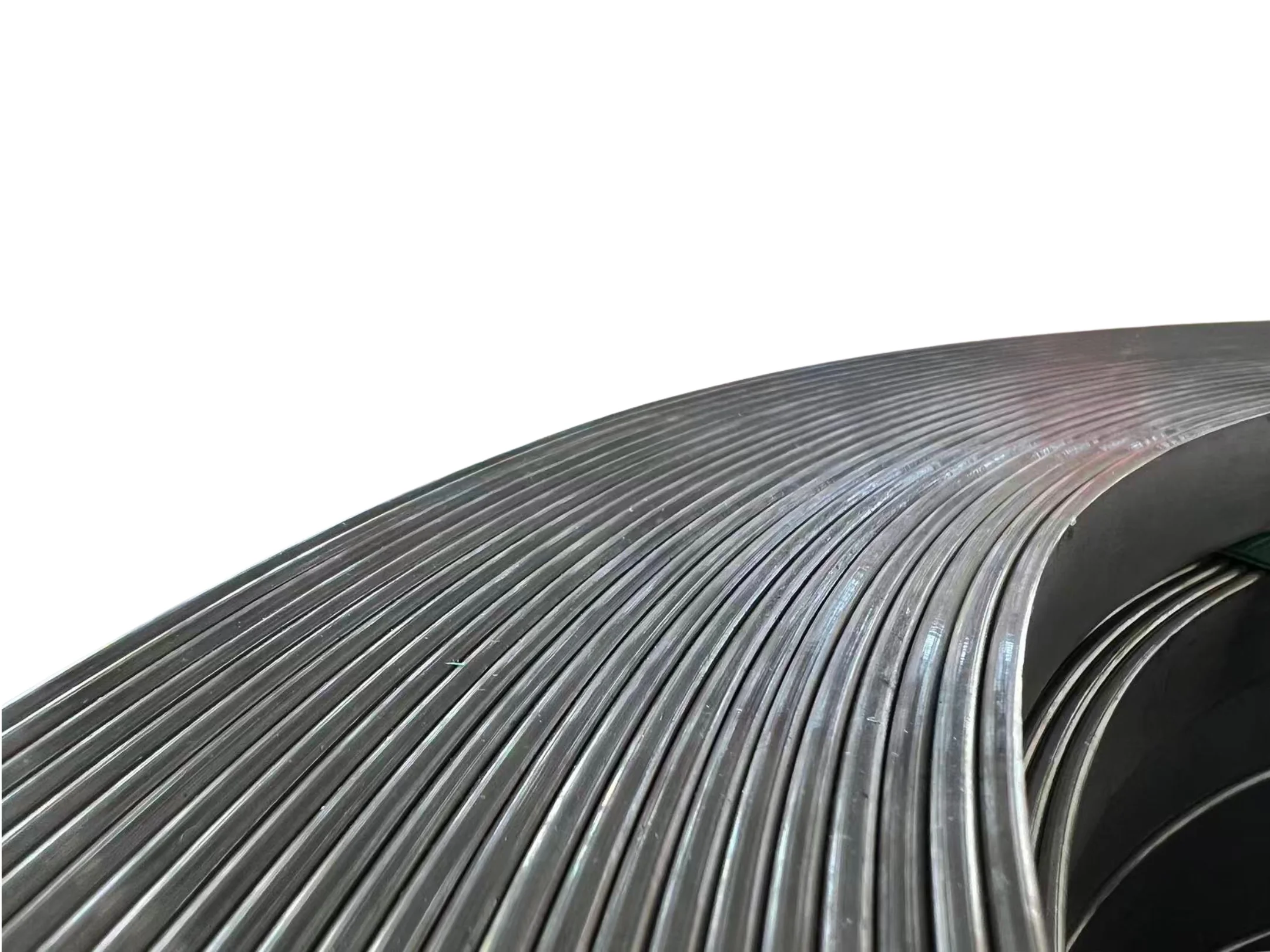
Welded pipes are manufactured by continuous roll-forming of flat-rolled stainless steel strip or plate into a cylindrical shape, after which the longitudinal seam is joined using Electric Resistance Welding (ERW), TIG (GTAW), or Submerged Arc Welding (SAW).
Manufacturing Process: Coiled Strip Uncoiling -> Continuous Roll Forming -> In-line Seam Welding -> Weld Bead Conditioning -> Sizing & Cutting.
Core Strength: High dimensional uniformity, consistent wall thickness, smoother internal surfaces, shorter production lead times, and lower unit cost.
Key B2B Applications: Fluid transfer in water treatment, low-to-medium pressure industrial piping (ASTM A312), food & beverage processing, and mechanical/structural tubing (ASTM A554).
B2B Sourcing Comparison: Seamless vs. Welded
| Sourcing Parameter | Seamless Pipes | Welded (ERW / TIG) Pipes |
| Working Pressure | Very High (Up to 100% allowable stress according to ASME standards) | Standard to High (Typically assigned a 0.85 weld joint efficiency factor unless 100% radiographed) |
| Wall Thickness Uniformity | Moderate (Eccentricity can occur during piercing) | Exceptional (Controlled by precision-rolled strip raw material) |
| Cost & Lead Time | Higher cost; longer manufacturing cycles | 20%–40% lower cost; faster production turnaround |
| Surface Finish (ID/OD) | Requires additional cold processing or polishing for high surface smoothness | Naturally smooth ID/OD due to uniform strip feed |
| Applicable Standards | ASTM A312 TP304/316L, ASTM A213, ASTM A269 | ASTM A312 TP304/316L, ASTM A249, ASTM A554 |
Part 2: Cold Drawn vs. Hot Rolled Stainless Steel Pipes
While “Seamless vs. Welded” describes how the pipe’s base shape is formed, “Cold Drawn vs. Hot Rolled” describes the thermal state of the metal during its final sizing and mechanical forming processes.
1. Hot Rolled (Hot Finished) Pipes
Hot rolling occurs above the recrystallization temperature of stainless steel (typically above 1,000°C / 1,832°F). The steel is plasticized and shaped easily through large rolling mills.
Key Characteristics:
Rougher surface scale (often requires pickling or passivating).
Broader dimensional tolerances (Outer Diameter and Wall Thickness).
Lower internal stress; excellent ductility.
Best Buyer Scenarios: Heavy structural applications, large-diameter industrial piping, structural piling, or projects where tight dimensional precision is not required and budget optimization is critical.
2. Cold Drawn (Cold Finished) Pipes
Cold drawing is performed at room temperature. A hot-rolled pipe blank is drawn through a hardened steel die and over an internal mandrel to reduce both diameter and wall thickness simultaneously.
Key Characteristics:
High dimensional precision (tight OD/WT tolerances).
Smooth, bright surface finish (essential for instrumentation and sanitary lines).
Higher yield and tensile strength due to work hardening (often followed by Bright Annealing to restore corrosion resistance).
Best Buyer Scenarios: High-precision instrumentation tubing (ASTM A269 coiled or straight tubing), hydraulic cylinder barrels, automotive fuel lines, and high-end commercial hardware/kitchenware tubing.
Engineering Comparison: Cold Drawn vs. Hot Rolled
Dimensional Precision: Cold Drawn (Much higher than Hot Rolled)
Surface Polish Potential: Cold Drawn (BA / Mirror Finish achievable) > Hot Rolled (Pickled / Mill finish)
Production Cost: Cold Drawn (Higher due to multi-pass dies & annealing) > Hot Rolled
Part 3: Strategic B2B Buying Decision Flowchart
When submitting an RFQ to YES Stainless International, follow this decision framework to ensure you balance technical safety with procurement cost:
                                [ START PROJECT RFQ ]
                                          |
                        Is the working pressure > 200 Bar
                       or subject to strict high-temp code?
                                /                  \
                              YES                  NO
                              /                      \
                  [ Select SEAMLESS ]          [ Select WELDED ]
                         |                            |
          Are tight tolerances and a smooth   Does the project require
          surface required (e.g., hydraulics)? standard utility piping?
                     /          \                       |
                   YES          NO               [ Select HOT ROLLED
                   /              \               or STANDARD WELDED ]
         [ Select COLD DRAWN ]   [ Select HOT ROLLED ]
High-Pressure or Critical Fluid Transport (Boilers, Subsea, Chemical Reactors): -> Specify Seamless, Cold Drawn / Cold Pilgered (ASTM A312 / ASTM A213).
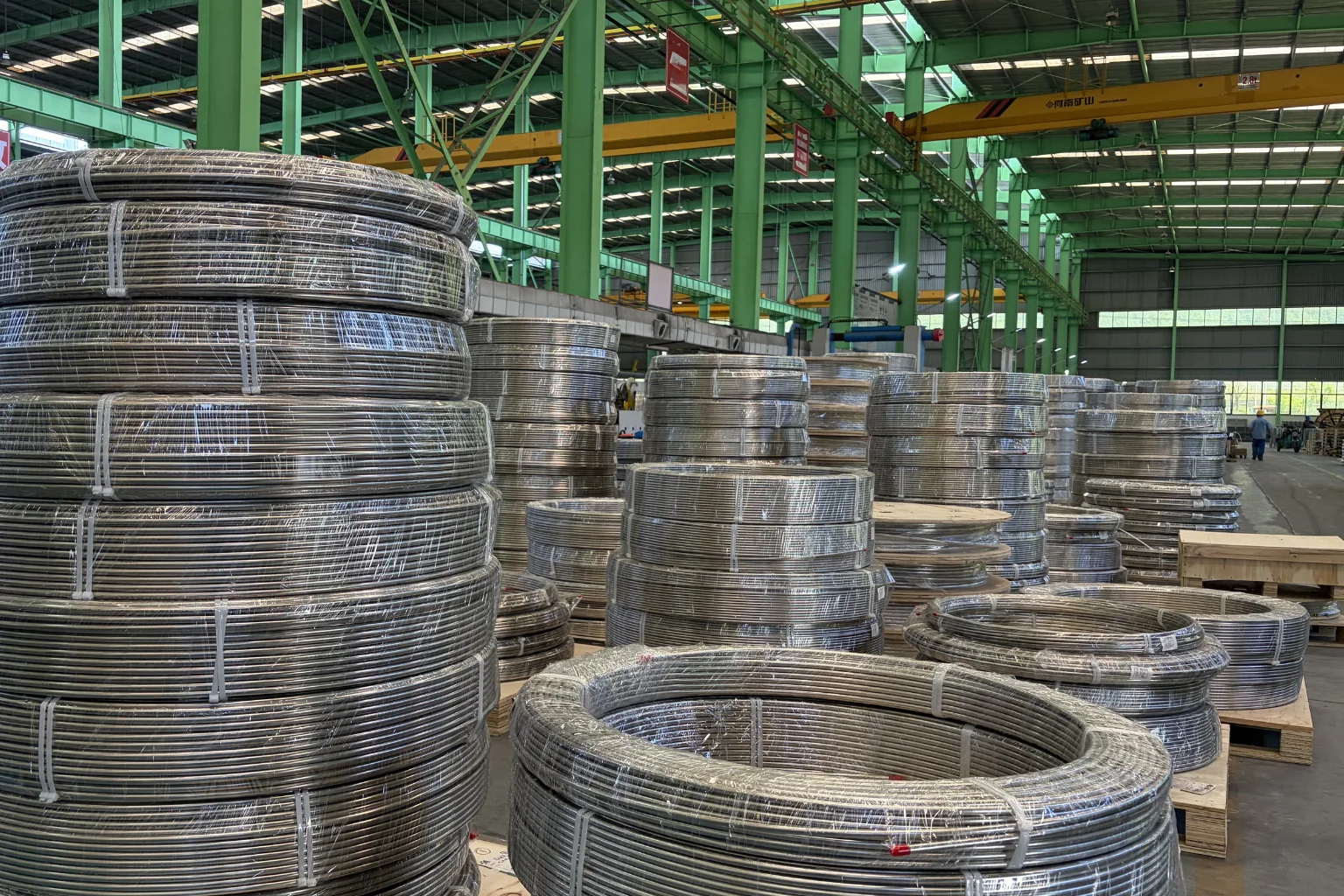
Instrumentation, Hydraulics, or Coiled Tubing Systems: -> Specify Seamless, Cold Drawn, Bright Annealed (BA) (ASTM A269, OD 6mm to 42mm).
General Chemical Transfer, Water Treatment, or Low-Pressure Process Lines: -> Specify Welded (TIG/ERW), Pickled & Passivated (ASTM A312 Welded).
Architectural, Commercial Kitchenware, and Decorative Frames: -> Specify Welded, Cold Finished / Polished (ASTM A554 with No.4 Satin or Mirror Polish).
Why Partner with YES Stainless International?
Sourcing stainless steel pipes globally requires more than finding a competitive price per ton—it requires guaranteed material traceability, strict tolerance controls, and reliable export logistics.
At YES Stainless International, we support global engineering contractors, distributors, and OEMs with:
Complete Manufacturing Scope: Full manufacturing capabilities across Seamless (Cold Drawn / Hot Rolled) and Welded (ERW / TIG) supply lines.
100% Quality Verification: Eddy Current Testing, Hydrostatic Testing, Positive Material Identification (PMI), and Dimensional Verification on every batch.
Complete Mill Test Certificates: Full traceability with MTRs compliant with EN 10204 3.1 standards.
Custom Processing & Packaging: Custom cut-to-length services, specialized surface polishing (No.4, Mirror, Bright Annealed), and export-grade wooden crate/end-cap packaging.
Optimize Your Piping Procurement Today
Whether your upcoming project requires high-pressure ASTM A269 seamless coiled tubing or ASTM A554 welded pipes for high-end equipment, our technical engineering team is ready to assist you with specifications, drawings, and competitive export quotes.
