
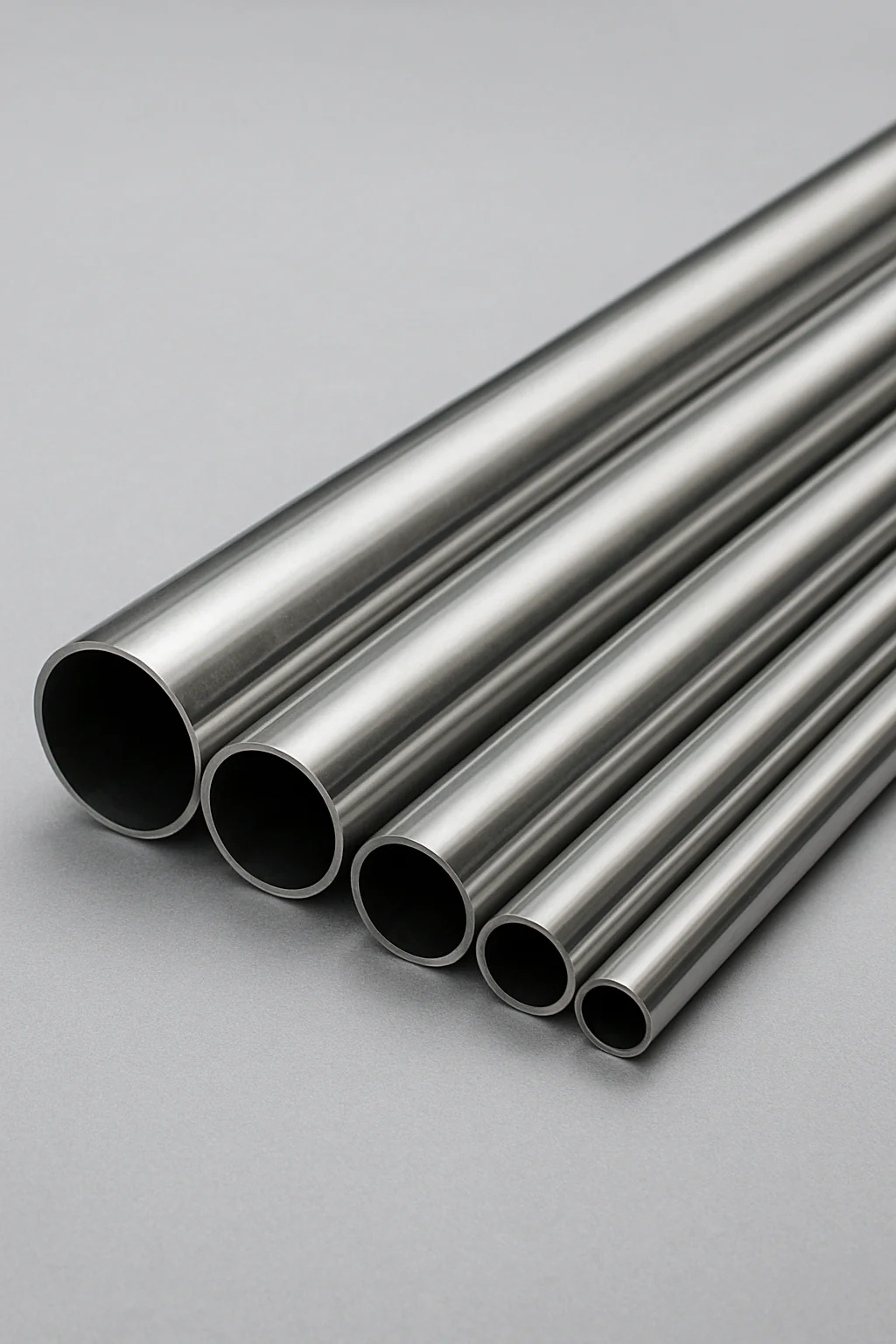
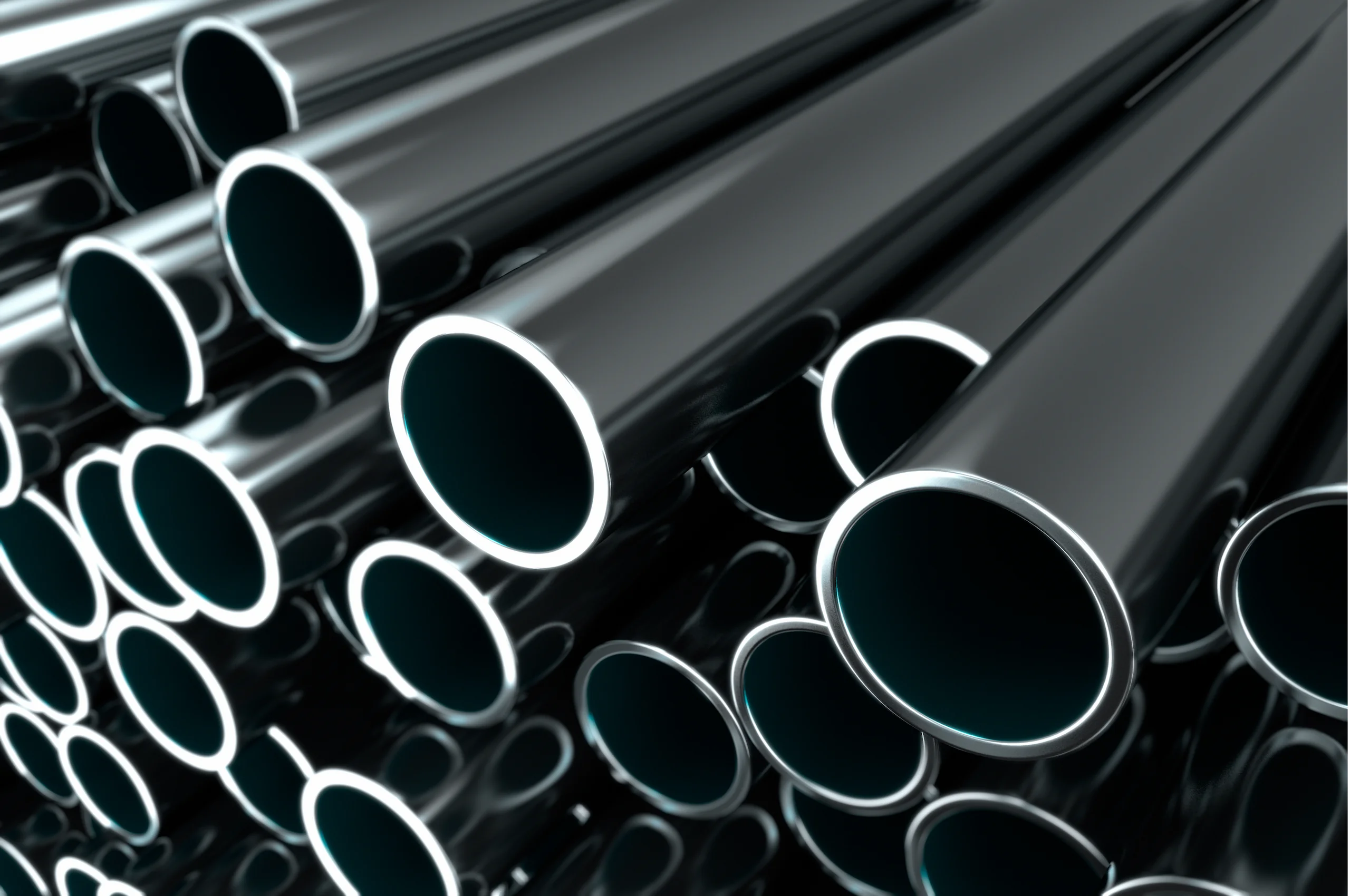
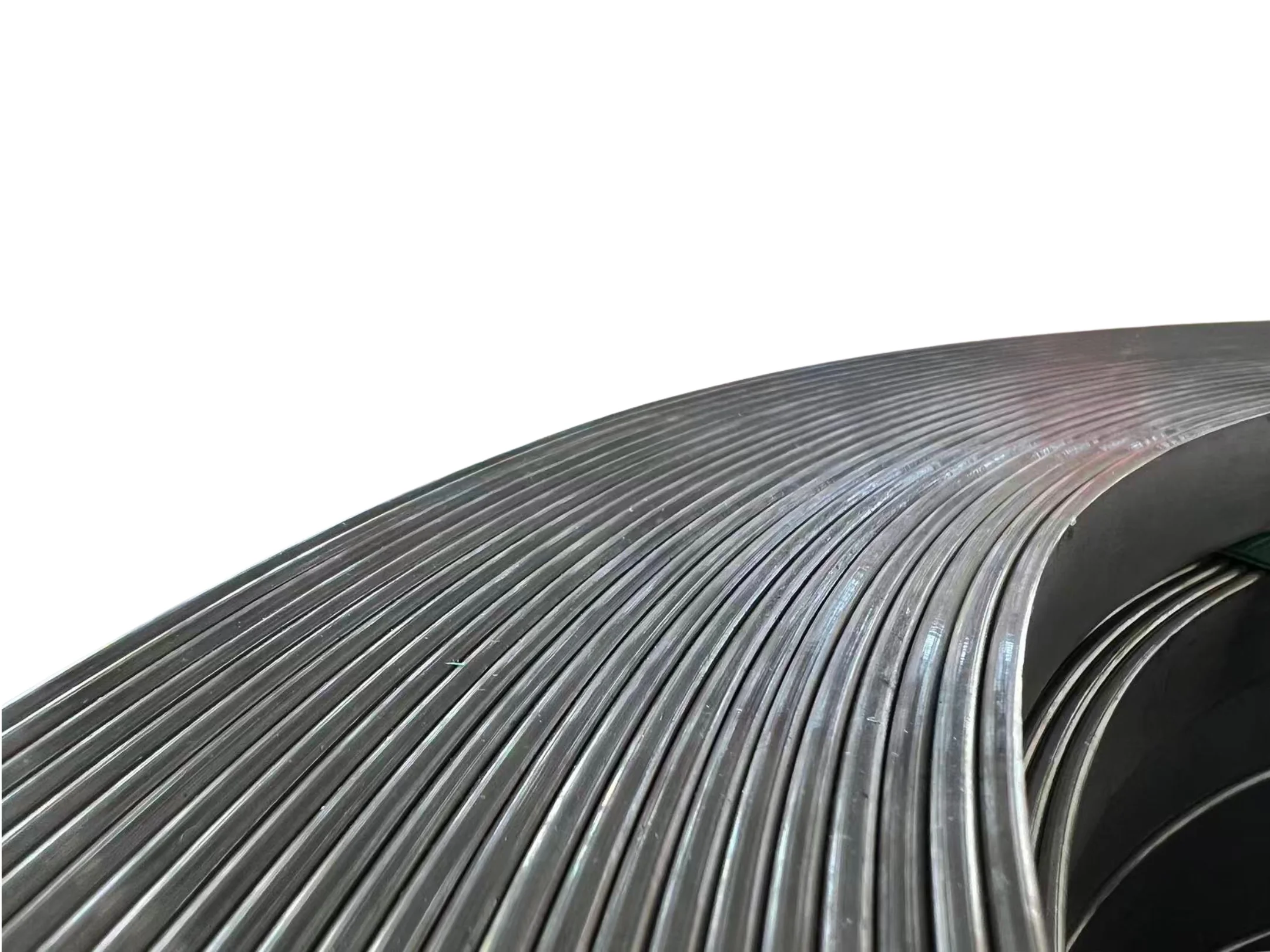
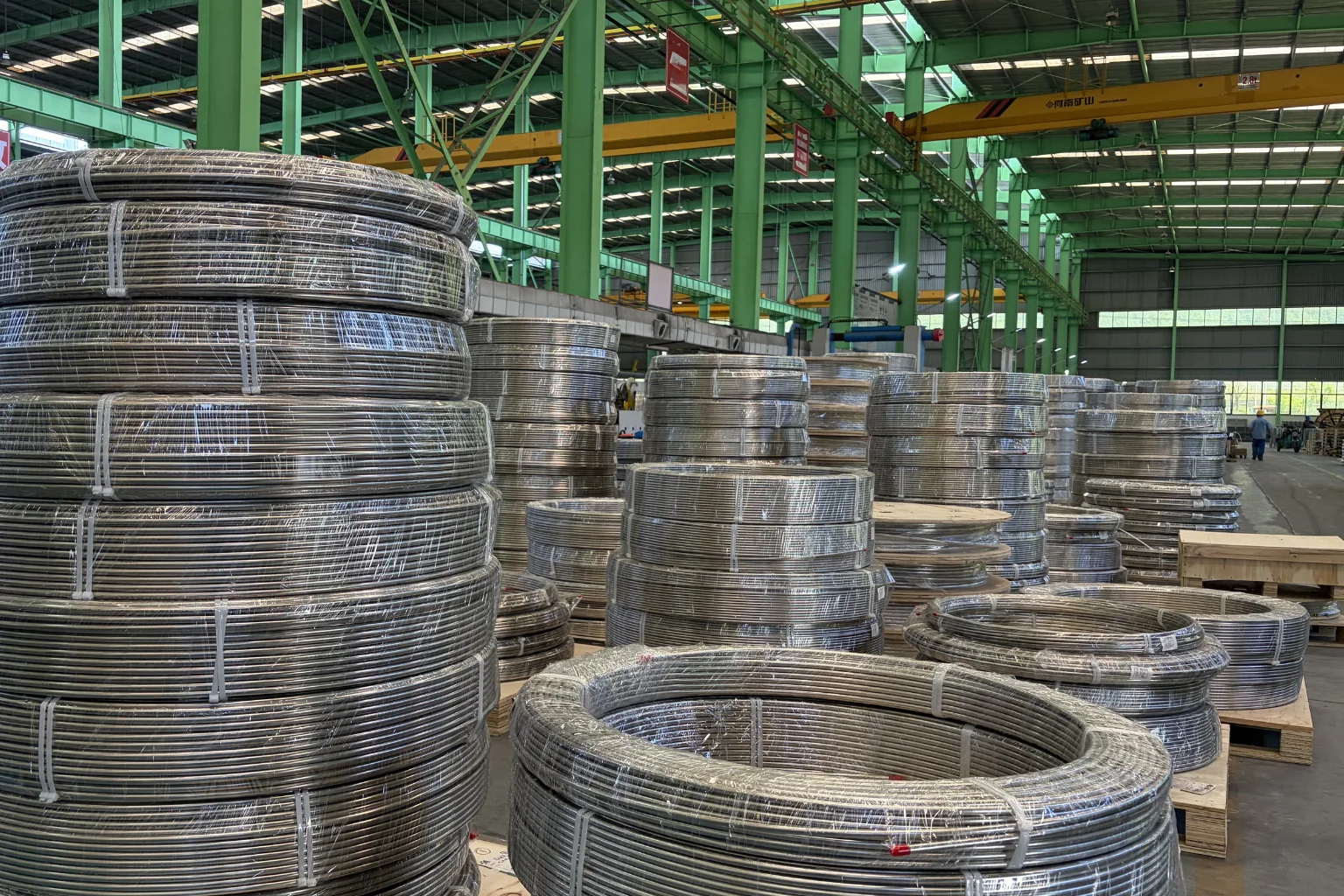





In industrial piping systems, surface finish dictates corrosion resistance, fluid friction, and bio-contamination risk. Selecting the incorrect surface finish can lead to premature pitting or process contamination.
At YES Stainless International, we offer tailored surface treatments engineered to match demanding mechanical and chemical environments.
Quick Summary: Surface Finish Comparison Matrix
The main surface finishes for industrial stainless steel piping compare across key metrics as follows:
| Surface Finish | Process Type | Typical Roughness (Ra) | Visual Appearance | Primary Industrial Application |
| Pickled & Annealed (AP) | Chemical bath (Acid solution) | 2.5 µm – 6.3 µm | Matte silvery-gray | Structural, chemical processing, heavy industry |
| Mechanically Polished (MP) | Mechanical abrasive grinding | 0.2 µm – 0.8 µm | Satin (#180-#320) or Mirror (#600) | Architectural, food & beverage, decorative |
| Bright Annealed (BA) | Inert gas furnace treatment | 0.1 µm – 0.4 µm | Highly reflective, mirror-like | Semiconductor, high-purity gas lines, medical |
1. Pickled & Passivated (AP / Annealed & Pickled)
Annealed and Pickled (AP) is the standard industrial finish for seamless and welded pipes. After hot working or heat treatment, an oxide scale forms on the steel surface.
-
The Process: Pipes are immersed in an acid bath (typically hydrofluoric and nitric acid) to dissolve heat tint and surface impurities, restoring the active chromium oxide passive layer.
-
Key Characteristics: A matte, non-reflective silvery surface with excellent uniform corrosion resistance.
-
Best Use Cases: Chemical processing plants, water treatment facilities, and oil & gas pipelines where functionality and corrosion resistance outweigh aesthetic shine.
2. Polished Finish (Mechanical & Mirror Polished)
Mechanical polishing uses abrasive belts or wheels with progressively finer grit sizes to smooth the outer diameter (OD) or inner diameter (ID).
-
Grit Classifications:
-
#180 – #240 Grit: Satin or hairline finish, common for sanitary tubing and handrails.
-
#400 – #600 Grit: High-gloss to true mirror finish for premium decorative or ultra-clean requirements.
-
-
Key Characteristics: Controlled surface roughness (Ra) that minimizes bacterial adhesion and optimizes cleanability.
-
Best Use Cases: Food and dairy processing, pharmaceutical distribution, and architectural fabrication.
3. Bright Annealed (BA)
Bright Annealing is an advanced heat treatment performed in a controlled-atmosphere furnace.
-
The Process: Pipes are heated to high temperatures (1010°C – 1150°C) and rapidly cooled inside a sealed environment of pure hydrogen or dissociated ammonia gas.
-
Key Characteristics: Because no oxygen enters the furnace, no oxide scale forms. The pipe emerges with an ultra-smooth, highly reflective finish without needing acid pickling.
-
Best Use Cases: Semiconductor manufacturing, gas distribution, automotive instrumentation, and high-purity sampling loops.
How Surface Roughness (Ra) Impacts Engineering Decisions
Surface roughness is measured in micrometers (µm) or microinches (µin) as Ra. Lower Ra values correspond to smoother surfaces that offer distinct operational advantages:
-
Lower Fluid Resistance: Smooth inner walls reduce pressure drop across long piping runs.
-
Reduced Biofilm Formation: Smooth surfaces eliminate microscopic crevices where bacteria accumulate during CIP (Clean-in-Place) cycles.
-
Enhanced Corrosion Resistance: Removing surface peaks and valleys prevents localized micro-crevice corrosion.
Conclusion: Choosing the Right Finish for Your Application
Choosing the right surface finish balances performance requirements with budget constraints. While Pickled (AP) pipes offer cost-effective durability for heavy industrial applications, Bright Annealed (BA) and Mirror Polished options provide the surface purity required for high-tech industries.
Consult with Technical Experts at YES Stainless International
Whether your project calls for standard industrial AP piping or specialized BA tubing, YES Stainless International provides certified products verified by Mill Test Reports (MTRs).
Contact YES Stainless International Today to discuss surface specifications or request material samples for your next project.
References & Technical Standards
-
ASTM A312: Standard Specification for Seamless, Welded, and Heavily Cold Worked Austenitic Stainless Steel Pipes (ideal for high-temperature and general corrosive service).
-
ASTM A269: Standard Specification for Seamless and Welded Austenitic Stainless Steel Tubing for General Service (commonly used for instrumentation and sanitary applications).
-
ASTM A249: Standard Specification for Welded Austenitic Steel Boiler, Superheater, Heat-Exchanger, and Condenser Tubes (engineered for critical heat transfer and pressure equipment).
-
ASTM A554: Standard Specification for Welded Stainless Steel Mechanical Tubing (designed for structural, ornamental, appliance, and automotive applications requiring precise surface finishes).
